Decoupling food and energy security from geopolitical volatility in 2026
“Green transition” has become a hard-nosed national security imperative.
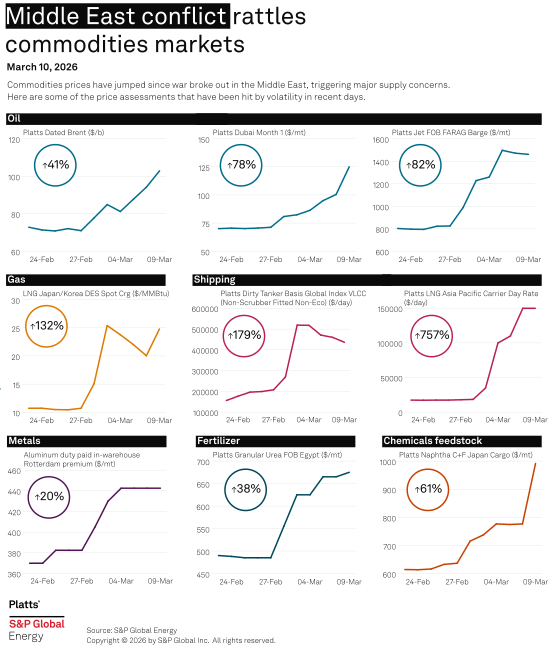
The Strait of Hormuz isn’t just a line on a map; it is a maritime jugular vein. When a fifth of the world’s liquid energy supply is squeezed, we don’t just see a headline; we see a 75% collapse in shipping traffic that sends shockwaves through the global nervous system. These numbers aren’t just abstractions on a Bloomberg terminal. They are visceral. They show up as shrapnel at the dinner table through food inflation and at the gas pump as structural deficits. When conflict-driven chaos turns imported molecules—both the hydrocarbons that move us and the fertilizers that feed us—into a gamble, the “green transition” stops being a lofty ideal. It becomes a hard-nosed national security imperative.
To build an economy that doesn’t break when a distant border is crossed, the strategic playbook must change. We have to move from the defensive crouch of managing scarcity to a proactive mastery of domestic electrification and efficiency.
The Nitrogen Trap: Reforming the Fertilizer Paradigm
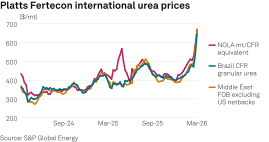
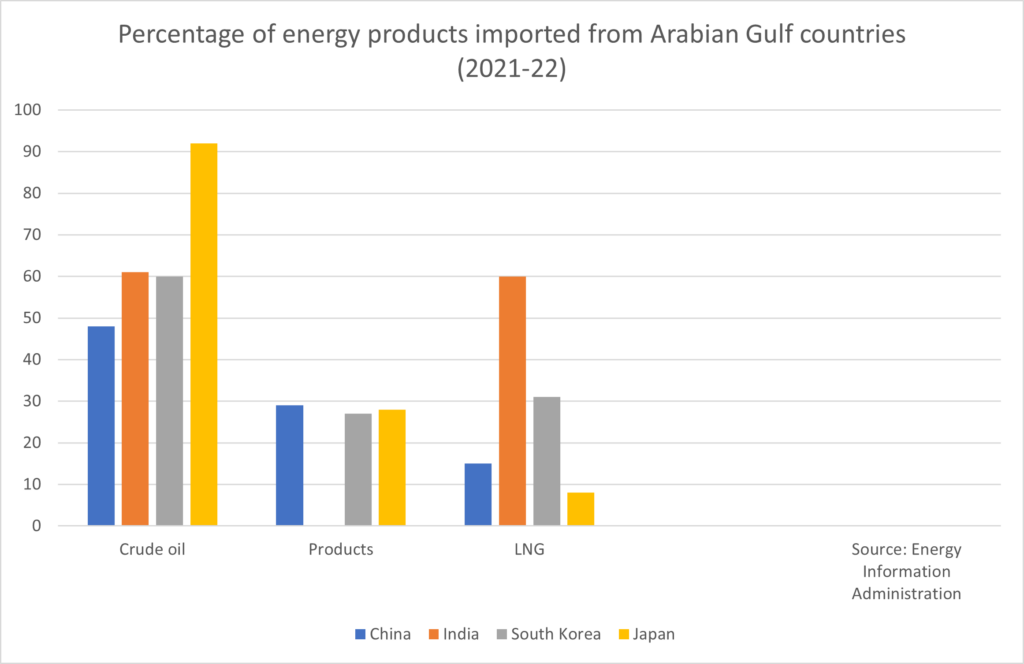
Right now, our food systems are held hostage by geography. In emerging giants like India, a staggering 90% of urea consumption is tethered to the whims of foreign markets, either imported directly or manufactured using imported Liquified Natural Gas (LNG). This is the “Nitrogen Trap”: a precarious reality where a nation’s food security is indexed to the volatility of global gas pipelines.
The NPK Imbalance and the Efficiency Frontier
The chemistry of our soil is dangerously out of whack. While agronomists call for a balanced ratio of 4:2:1 (Nitrogen:Phosphorus:Potassium), the actual usage in many regions has spiralled into a chemical bender of 9.8:3.7:1 (according to Kharif 2024 data). This addiction to subsidized urea does more than just bleed the national treasury; it triggers a slow-motion ecological disaster and a spike in nitrous oxide emissions.
Key Insight: Nutrient Use Efficiency (NUE) is the ultimate “untapped resource.” By deploying precision agriculture and nanotechnology-based fertilizers, nations can maintain yields while slashing the volume of imports. This reduction in demand is the prerequisite for making the transition to Green Ammonia economically viable.
The Green Ammonia Frontier: Scaling Beyond the Lab
Green Ammonia—forged via electrolysis and powered by wind and sun—is the only credible exit ramp from molecular dependency. This isn’t a niche experiment; the market is projected to rocket from $653.76 million in 2025 to over $36 billion by 2034, a staggering CAGR of 53.03%.
But let’s be honest about the “cost chasm.” Currently, the green stuff can cost two to three times more than its fossil-fuel-derived cousins. Bridging this gap requires more than just hope; it demands carbon border adjustments and a brutal scaling of electrolyzer manufacturing. We also have to face the “energy-water-land nexus.” You cannot produce Green Ammonia at scale without a massive renewable footprint and serious freshwater resources, which means the future likely belongs to desalinated water and offshore wind integration.
| Feature | Fossil-Fuel Based Urea | Green Ammonia / Efficient NPK |
|---|---|---|
| Feedstock | Imported LNG / Coal | Domestic Wind/Solar + Water |
| Price Stability | Low (Tied to Global Oil/Gas) | High (Tied to Domestic RE LCOE) |
| Geopolitical Risk | High (Chokepoints/Sanctions) | Minimal (Localized Production) |
| Environmental Impact | High Carbon Intensity | Near-Zero Carbon Emissions |
| Economic Logic | OPEX-Heavy (Fuel Costs) | CAPEX-Heavy (Infrastructure) |
The Electrification Shield: Replacing Pipes with Wires
The most effective way to insulate an economy from a flare-up in the Persian Gulf or Eastern Europe is to shrink your “combustion surface area.” This means a systematic, aggressive migration from imported molecules to domestic electrons.
1. The Kitchen Revolution: Overcoming “Stove Stacking”
Swapping biomass and LPG for electric induction is a massive fiscal win disguised as a home upgrade. But the barrier isn’t just the tech; it’s the trust.
- The Reliability Gap: In many regions, “stove stacking”—keeping a backup gas cylinder in the corner—persists because the power goes out. For e-cooking to win, grid uptime must be a flawless 99%+.
- Social Equity: This can’t be a luxury transition. We need “electricity-as-a-service” models to cover the upfront cost of induction kits for the poor, ensuring that the move away from volatile LPG prices doesn’t leave anyone in the dark.
2. Mobility and Industrial Heat: The Efficiency Multiplier
The EV wave is no longer a ripple; global demand is set to hit 721 terawatt-hours by 2035. Even if the grid still leans on coal for now, an EV is a thermodynamic miracle compared to the internal combustion engine. It centralizes emissions, making them infinitely easier to capture and abate.
In the factory, the focus is shifting to Process Heat. High-precision industries are ditching gas furnaces for Electric Arc Furnaces (EAF) for steel and industrial heat pumps for food processing. As strategist Arthur Moslow puts it: “Electricity is inherently more controllable than combustion; we are moving from the blunt force of fire to the precision of the electron.”
Grid Modernization: The Backbone of Resilience
Decoupling requires a grid that is “intelligent” rather than just “expansive.” We have to solve the “Silicon Bottleneck”—our scary reliance on specialized semiconductors for smart meters—by diversifying the guts of our power supply chains.
- Long-Duration Energy Storage (LDES): To survive the moments when the wind dies and the sun sets, we need to look beyond lithium-ion. That means serious capital for Pumped Hydro, Vanadium Flow Batteries, and Green Hydrogen storage to provide multi-day buffers.
- Managed Demand: A smart grid turns every EV fleet into a distributed battery (Vehicle-to-Grid), soaking up excess solar during the day and feeding the monster at night.
The Path Forward: A Multi-Decade Roadmap
The era of “interconnected vulnerability” won’t end by accident. It requires a mobilization of capital in the trillions and a phased, disciplined execution:
- Phase I (2024–2030): Efficiency & Optimization. Fixing those broken NPK ratios and installing the smart meters needed to stop the bleeding.
- Phase II (2030–2040): Structural Electrification. Mass adoption of EVs and e-cooking, backed by a “Just Transition” to ensure fossil fuel workers aren’t left behind.
- Phase III (2040–2050): Molecular Decoupling. Scaling Green Ammonia and Hydrogen until the last vestiges of import-dependent feedstocks are purged.
By leaning into these pillars, nations can ensure that a fire in a distant land does not dictate the price of a citizen’s dinner or the heartbeat of a nation’s industry.
Executive Summary
- “Sovereignty is now a function of supply chain length; the shorter the link, the safer the state.”
- “Decoupling demands a 4:2:1 NPK ratio, a $36B Green Ammonia push, and total electrification of heat.”
- “By swapping imported molecules for domestic electrons, nations turn geopolitical fragility into climate-hardened resilience.”
Data Synthesis: This analysis integrates 2024 NPK usage data, Green Ammonia CAGR projections (2025–2034), and IEA electricity demand forecasts. It accounts for the ‘Silicon Bottleneck’ in grid tech and the CAPEX requirements for a total energy transition.
Further Reading
The Nitrogen Trap: India’s Dangerous Addiction to Urea and the Erosion of Agronomic Sovereignty
The Great Kitchen Paradox: Can India’s Fragile Grid Survive the Electric Cooking Revolution?
Gas-tronomical Challenges: Breaking Down India’s Biogas Supply Chain
The Great Regression: Why the Global South is Trading Gas for Grime