The Great Kitchen Paradox: Can India’s Fragile Grid Survive the Electric Cooking Revolution?
As the long, flickering shadows of West Asian volatility stretch across the globe, threatening the precarious LPG supply chains India leans on, New Delhi has been forced into a corner. The response? A high-stakes “Electric Cooking Revolution”. While policy architects paint e-cooking as a sleek, dual-purpose miracle for energy sovereignty and the national ledger, a gritty, structural truth remains: **India’s power grid is not yet robust enough to carry the full weight of the nation’s pressure cookers.**
The Strategic Pivot: Why Electric, Why Now?
The drive toward electric cooking (e-cooking) has moved past the soft language of climate rhetoric; it is now an issue of cold, hard national security. India currently manages a staggering 315 million active LPG connections—a monument to the Pradhan Mantri Ujjwala Yojana. But this triumph has a dark side, tethering the national economy to the erratic whims of global commodity traders. With non-subsidized LPG draining ₹6,424 (US$73) annually and Piped Natural Gas (PNG) sitting at ₹6,657 (US$76), electricity has become the only logical escape hatch.
Data proves that for any household paying under ₹6.6 per unit, induction is the undisputed economic winner. However, this isn’t just a simple gear swap; it’s an infrastructural overhaul of monstrous proportions. Plugging in just 100 million households to 1.5 kW induction stoves would theoretically dump 150 GW of peak demand onto the system. That is a terrifying number when you realize India’s total peak demand currently breathes around 240 GW.
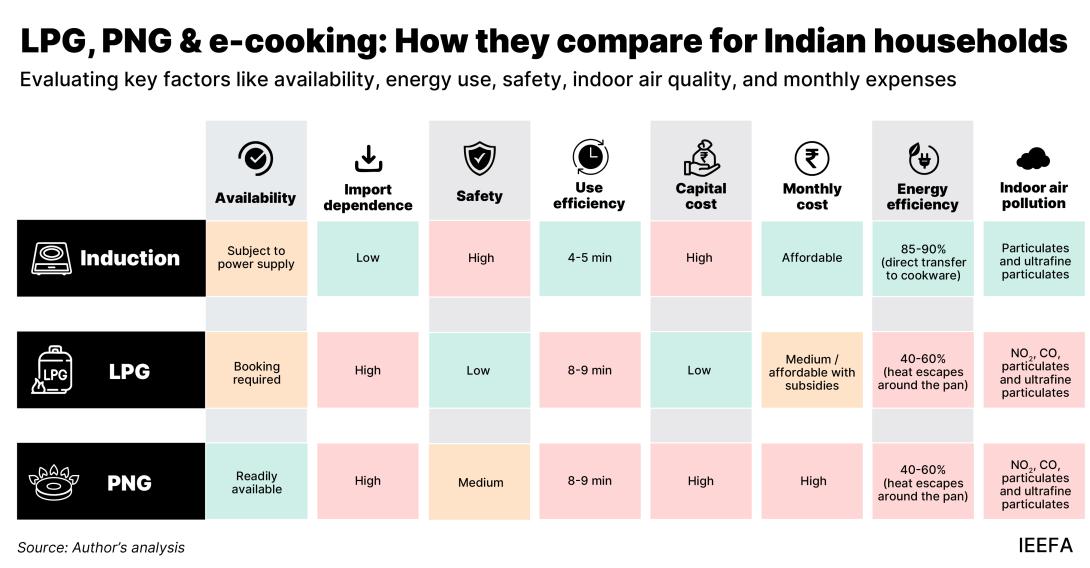
Table 1: Comparative Annual Cooking Costs & Barriers (Family of Four)
| Fuel Type | Annual Cost (Approx.) | Efficiency | Primary Constraints | Initial Capex |
|---|---|---|---|---|
| LPG (Non-subsidized) | ₹6,400 – ₹6,900 | 40-55% | Import dependency; Price volatility | Low (Subsidized) |
| PNG (Piped Gas) | ₹6,600 – ₹6,700 | 50-60% | Infrastructure limited to urban hubs | Moderate |
| Electric Cooking | ₹5,800 – ₹5,900 | 85-90% | Grid reliability; Internal wiring | ₹3,500 – ₹8,000 |
The Achilles’ Heel: Grid Reliability and the “Noida Factor”
Technocrats are currently scrambling to juice production through Production-Linked Incentive (PLI) schemes for induction heaters. Yet, the entire project faces a fundamental, ground-level wall: the fragility of last-mile delivery.
Even in “A-grade” hubs like Noida or Gurugram, the sudden, teeth-grinding reality of unscheduled blackouts—usually the result of a local transformer surrendering to the heat—makes it impossible to ditch the gas cylinder entirely. In the rural heartland, where 40% of households still burn biomass alongside LPG, the idea of a purely electric kitchen is a non-starter. Then there is the “Safety Gap.” Most legacy Indian homes are wired for modest 5-ampere loads; a serious induction stove demands a 15-ampere circuit. Without a massive, house-to-house rewiring crusade, this “Revolution” is just a fire hazard waiting for a spark.
Takeaway: For the marginalized, energy security isn’t just about national imports; it’s about the certainty of the next meal. A family that cannot afford multiple cooking mediums will always choose the one that works when the lights go out. Reliability is the only currency that matters at the dinner table.
Technology as a Bridge: Solving the “Roti Problem”
Bridging the gap between grid anxiety and actual utility means confronting deep-seated culinary DNA. Induction is efficient, yes, but it has famously failed the “Roti Test”—the stubborn inability to puff flatbreads or provide that charred, open-flame soul essential to Indian cooking.
- Induction (₹2,500 – ₹4,500): Operates on electromagnetic fields; demands specific magnetic cookware (slapping an extra ₹1,500-₹3,000 onto the entry price); 90% efficient.
- Infrared Cooktops (₹4,000 – ₹6,500): These use high-efficiency elements to throw actual heat. They are utensil-agnostic, meaning the old family kadhai works just fine, and they can actually handle a roti.
Still, the sheer draw of these machines (1.5kW to 2.0kW) dwarfs the capacity of the average home inverter. When the grid dies, the kitchen goes dark, unless a family can cough up the cash for high-capacity Battery Energy Storage Systems (BESS).
The Decarbonization Dilemma
Look closely at the data and you find a messy environmental irony. In the immediate future, e-cooking might actually be more carbon-heavy than LPG because India’s grid still runs on a massive diet of coal.
- LPG Emission Factor: 2.91 kg CO2e/kg.
- Electric Cooking (2021-22 Grid): 0.71 kg CO2e/kWh (cranking out roughly 691 kg CO2/year per household, vs. 330 kg for LPG).
But the long game looks different. As the PM Surya Ghar Yojana (Rooftop Solar) aggressively pushes renewables into the mix, that emission profile is slated to tumble to 0.52 kg CO2e/kWh by 2027. Eventually, the wire becomes cleaner than the tank.
The Path Forward: A Hybrid Ecosystem
If the government wants to move past the stalemate, they have to stop thinking about “appliances” and start thinking about “resilience”:
- Direct Consumer Financing: The PLI for factories is fine, but we need financing (via EESL) to crush the ₹5,000 entry barrier for infrared tech and specialized cookware.
- DRE and BESS Integration: Decentralized Renewable Energy (DRE) has to be part of the kitchen. The hurdles are real—dense urban slums have no roof space, and lithium-ion batteries remain a luxury.
- Smart Load Management: Planners need to brace for the “Geyser Effect.” When a neighborhood switches to electric cooking and water heating simultaneously, local transformers will melt without smart meters and Time-of-Use (ToU) pricing.
Summary: The Future of the Indian Kitchen
- “Electric cooking provides a vital economic escape, yet India’s fragile grid remains the ultimate bottleneck for mass adoption.”
- “Bridging the ‘reliability gap’ requires infrared technology and a pragmatically sustained, multi-fuel strategy involving both LPG and electricity.”
- “True kitchen sovereignty hinges on making rooftop solar and storage as affordable and accessible as the humble gas cylinder.”