The Great Regression: Why the Global South is Trading Gas for Grime
There is a bitter irony unfolding in the shadows of the global energy transition. While delegates in Dubai and Baku trade polished rhetoric about net-zero futures, a gritty, “back to the 90s” regression is quietly strangling emerging markets. Call it the “Retrograde Energy Crisis.” It is a systemic collapse of clean cooking progress, triggered by the jagged volatility of West Asian supply lines, maritime chaos in the Red Sea, and the inflationary tremors of the Ukraine conflict. This perfect storm of Liquefied Petroleum Gas (LPG) shortages is forcing roughly 100 million households to ditch their gas canisters and return to the primitive, soot-heavy fuels of their ancestors.
As coal and wood-fired stoves make a grim comeback, the clean cooking sector—once heralded as the easiest win for climate and public health—is staring into an abyss. The survival of this movement now depends on a frantic pivot: can we deploy ethanol, hydrogen, and electric induction fast enough to stop “path dependency” from locking another generation into a cycle of respiratory disease and forest stripping?
The Toxic Return: Quantifying the “90s Comeback”
Slipping back into the use of “traditional” fuels—wood, dung, crop scrap, and coal—isn’t some benign, temporary belt-tightening. It is a full-scale environmental and public health disaster. According to the International Energy Agency (IEA), 2023 marked a dark milestone: for the first time in decades, the number of people without clean cooking access actually grew. Two decades of hard-won progress in Sub-Saharan Africa and Asia are evaporating in a cloud of smoke.
- Health Hazards: Burning solid fuels (SF) in unvented huts creates a lethal indoor atmosphere. Beyond the well-known Particulate Matter (PM2.5), these stoves belch out Polycyclic Aromatic Hydrocarbons (PAHs) and heavy metals. The World Health Organization (WHO) currently links nearly 3.2 million premature deaths every year to this specific brand of household air pollution.
- The Demographic Toll: This crisis has a female face. Women and children are the ones trapped in “time poverty,” spending hours scavenging for wood, and they are the ones whose lungs bear the brunt of the daily smoke inhalation.
- Climate Impact: These cookstoves aren’t just a local tragedy; they are global climate drivers. They account for 25% of global black carbon emissions—a pollutant that doesn’t stay in the atmosphere long but has a warming punch thousands of times stronger than CO2.
Insight: The “rebound effect” toward coal and wood exposes a structural rot in the global energy market. It is a direct assault on the UN Sustainable Development Goals (SDGs), specifically SDG 3 (Good Health) and SDG 7 (Affordable and Clean Energy). It proves, quite brutally, that energy security is the non-negotiable prerequisite for any real energy transition.
The Economics of Transition: Financing the Gap
The road to clean air is paved with expensive hardware, and the poor are stuck in a “liquidity trap.” Even when governments try to subsidize the fuel itself, the upfront cost of hardware remains an impassable wall. A modern ethanol or induction stove costs between $40 and $80. For a family living on less than $2 a day, that isn’t just a high price—it’s an impossible one.
To fix this, the money is moving toward Results-Based Financing (RBF) and the high-stakes world of carbon markets.
The Financial Landscape of Clean Cooking
| Mechanism | Primary Function | Upfront Cost Mitigation | Current Outlook |
|---|---|---|---|
| Carbon Finance | Monetizes avoided CO2/Black Carbon. | High: Subsidizes stove costs via credits. | Volatile; requires rigorous MRV to maintain integrity. |
| Results-Based Funding (RBF) | Pays for verified health/energy outcomes. | Medium: Rewards sustained usage over time. | Gaining traction via the World Bank and Clean Cooking Alliance. |
| Pay-As-You-Go (PAYGO) | Micro-installments via mobile money. | Total: Eliminates the “entry fee” for tech. | Essential for scaling electric and ethanol options in Africa. |
Carbon Credits: A Precarious Bridge
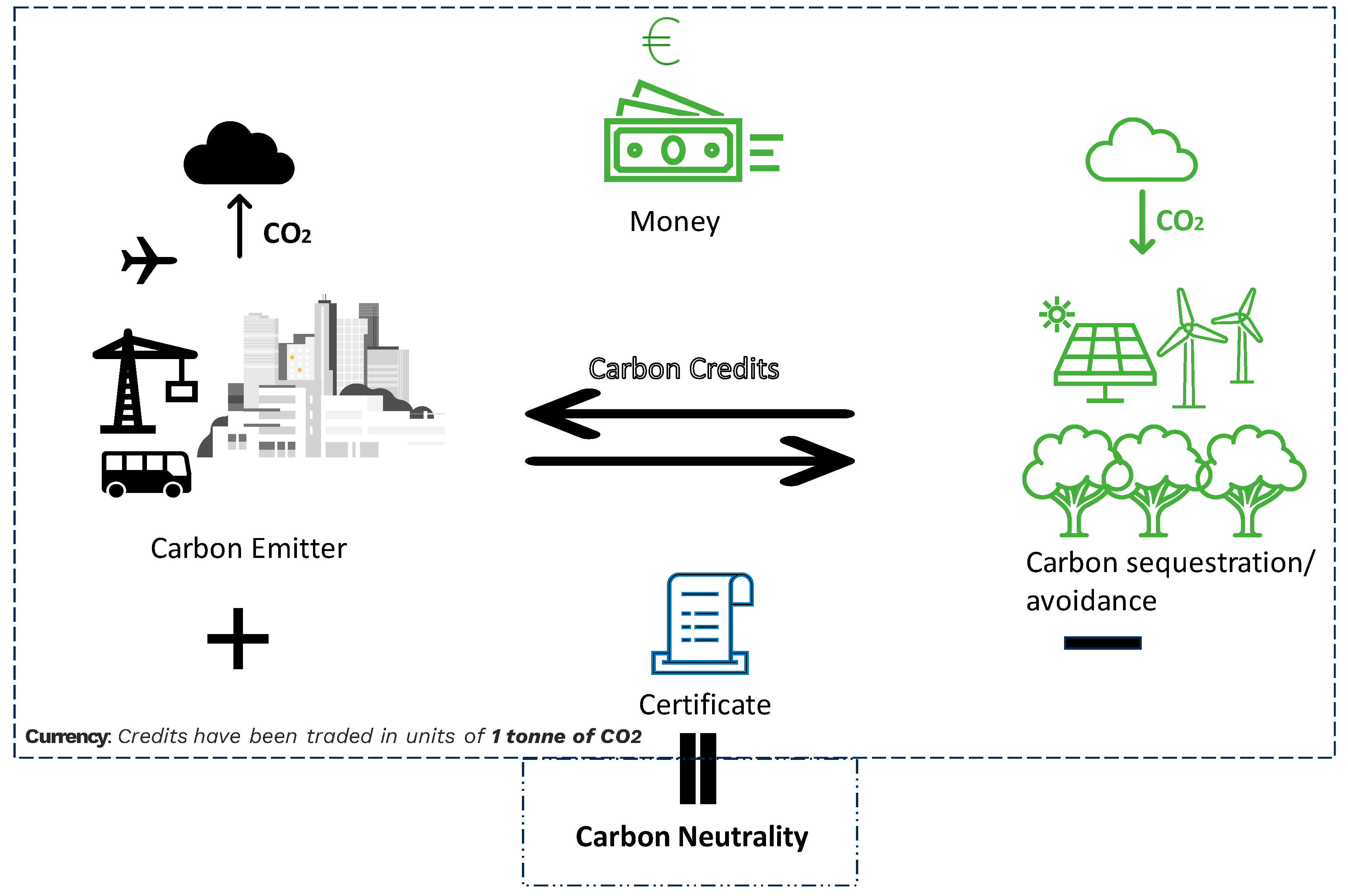
For developers working under the Clean Development Mechanism (CDM) or Gold Standard, this regression to solid fuels creates a massive “baseline” of emissions. On paper, this theoretically lets projects issue more credits by showing a higher volume of avoided emissions. But that’s a hollow victory. If the underlying infrastructure remains fragile, the Measurement, Reporting, and Verification (MRV) processes will eventually show that the stoves aren’t being used. Once that happens, the credits lose their value, and institutional investors will run for the exits.
Evaluating the Alternatives: Beyond the LPG Hegemony
Breaking the chokehold of LPG—a fuel tethered to the whims of global oil prices—requires a messy, multi-pronged diversification. However, each technology has its own “Time-to-Scale” reality.
1. Ethanol: The Near-Term African Solution
Ethanol is looking like the most logical successor to LPG in places like Kenya and Ethiopia. It burns clean and can be brewed from local agricultural waste, effectively insulating local families from West Asian geopolitics.
- The Challenge: Building a “denatured” supply chain that ensures people cook with the alcohol rather than drinking it or selling it on the illicit market.
- Timeline: 2024–2028 for serious mass-market presence in cities.
2. Electric Induction: The Efficiency King
Data from Nepal and Ecuador shows a staggering efficiency gap: LPG burners waste half their heat, while electric induction hits 80% efficiency. This “Power-to-Cook” movement aims to suck up surplus renewable energy from national grids.
- The Challenge: Grid rot. In rural villages, the “baseline” voltage is often too weak to handle the 1,500W–2,000W pull of a standard induction plate.
- Timeline: 2025–2030 for nations with decent electrification.
3. Hydrogen: The Long-Term Wildcard
Green hydrogen is the “holy grail,” with the UK and Chile experimenting with hydrogen-natural gas blends for the home.
- The Challenge: “Last mile” infrastructure is non-existent. There are no refueling networks for hydrogen in the Global South, and the cost of making the stuff remains astronomical.
- Timeline: 2040+ before we see this scaling in homes.
Structural and Behavioral Barriers: The “Taste of Smoke”
You cannot solve a socio-economic puzzle with hardware alone.

- Policy Failures: India’s Pradhan Mantri Ujjwala Yojana (PMUY) was a masterclass in distribution, handing out 100 million LPG connections. Yet, many of those canisters sit empty and “dead” because families can’t afford the refills without permanent subsidies.
- Cultural Resistance: There is a deep-seated “taste preference” for food cooked over wood or charcoal. Moving the needle requires more than a new stove; it requires behavioral campaigns led by people the community actually trusts.
- The Dual-Fuel Trend: We are seeing a 10.1% CAGR growth in dual-fuel ranges. These units let users flip between electricity and gas (or ethanol), providing a “resilience buffer” when one supply chain inevitably snaps.
The Road to 2026: A Call to Action
The upcoming 2026 Summit on Clean Cooking in Africa has to stop obsessing over “distribution.” The focus needs to shift toward de-risking the supply chain and making things locally. Governments have to step up:
- Kill the VAT/Tariffs on clean cooking tech immediately.
- Make Cooking Part of NDCs: National Determined Contributions under the Paris Agreement have to include specific, hard targets for clean cooking.
- Fund the Grid, Not Just the Gear: Invest in ethanol micro-distilleries and rural grid reinforcement.