The Great Indian Solar Pivot: Is PM Surya Ghar Revolutionizing the Grid or Racing Against Time?
Something fundamental is shifting in how India powers its progress. The era of the “mega-project”—those sprawling, centralized silicon forests in the Thar Desert or Pavagada—is being challenged by a much more granular movement. The revolution has moved from the wasteland to the rooftop. As of February 2026, the PM Surya Ghar: Muft Bijli Yojana has officially crossed the 3 million installation milestone.
This isn’t just a win for the bureaucrats; it is the birth of the “prosumer,” a tectonic shift that fundamentally recalibrates the power dynamic between the state, the utility, and the citizen.
But look closer, and the polish begins to show some cracks. Beneath the celebratory headlines lies a complex reality: a story of massive empowerment colliding with systemic friction, supply chain bottlenecks, and a widening geographical gap that threatens to leave half the country in the dark.
The Milestone: 3 Million Homes and the “Prosumer” Awakening
Launched in early 2024 with a massive ₹75,021 crore war chest, the PM Surya Ghar scheme was an audacious bet on the Indian rooftop. Two years later, that bet is paying off. It has successfully moved from a glossy policy document to a tangible reality on 3 million concrete terraces. By turning citizens into generators, the state has effectively decentralized national energy security, transforming passive bill-payers into active “prosumers.”
Insight: This isn’t just a technical upgrade; it’s a psychological one. For the first time, the Indian middle class doesn’t see energy as a monthly drain on their bank account, but as a domestic asset they own. This democratization of the electron is perhaps the most significant shift in Indian civic life since the mobile phone revolution.
Key Performance Indicators (Data as of Feb 2026)
| Metric | Status / Value |
|---|---|
| Total Households Benefited | 3,000,000+ |
| Total Installed Capacity | 9.08 GW |
| Total Subsidy Disbursed | ₹17,518.36 Crore |
| Target by March 2027 | 10,000,000 (1 Crore) Homes |
| Dominant Installation Segment | 3–5 kW (77% of total) |
The Strategic Rationale: A Hedge Against Grid Curtailment
This isn’t just about lower bills. This decentralized push is a survival strategy for the national grid. By 2025, India’s renewable capacity had ballooned past 258 GW, bringing with it the dreaded “duck curve.” This occurs when a surge of solar power during the day creates a glut that the grid simply cannot swallow, leading to grid curtailment—essentially, clean energy left to rot.
Rooftop solar solves this by moving the “factory” to the point of consumption. Every panel on a home in Lucknow or Pune does three things:
- Blunts the burden on aging, high-voltage transmission infrastructure.
- Sidesteps the immediate need for massive, expensive utility-scale battery storage by using a “behind-the-meter” logic.
- Slashes Transmission & Distribution (T&D) losses, which have historically bled Indian DISCOMs of nearly 20% of their power.
In short, a kilowatt-hour generated on a roof doesn’t have to travel 500 miles through a leaky grid to reach the lightbulb.
The Geographical Skew: A Tale of Five States
The data tells a story of fragmented success. While the mandate is national, the reality is a two-speed transition. The “Solar Revolution” is currently concentrated in a handful of states that have mastered the art of cutting red tape and building industrial ecosystems.
The Top 5 Beneficiaries & Their Success Factors:
- Gujarat (2,157 MW): The undisputed heavyweight. Its success is built on the “Surya Gujarat” foundation and a Single Window Portal that actually works, linking vendors, banks, and utilities in one digital handshake.
- Maharashtra (1729.36 MW): Success here is driven by aggressive state-level top-up subsidies for marginalized communities—sometimes covering 95% of the cost—and a massive inventory of independent housing.
- Uttar Pradesh (1350.77 MW): A sleeping giant that finally woke up. Led Q4 2025 growth with 287 MW, fueled by the high-profile “Solar City” initiatives in Ayodhya and Varanasi.
- Kerala (785.89 MW): Land is too expensive for mega-parks here. High consumer awareness and geographical constraints have made rooftop solar the only logical path forward.
- Rajasthan (583.66 MW): It has the best sun in the world, but struggles with lower population density in its most sun-drenched zones.
Takeaway: This uneven map is a flashing red light for policymakers. While leaders have simplified net-metering, other states are still drowning in “bureaucratic friction” and utility-level pushback, creating a stark divide in energy equity.
The Elusive Target: Why 10 Million is a Herculean Task
The government is celebrating the 3 million mark, but the shadow of the 10 million target for 2026-27 looms large. To hit that number, India needs to bolt down nearly 23,000 MW of new capacity in a single year. That is a scale of acceleration for which there is no global precedent.
The Critical Bottlenecks:
- Financial Friction: The subsidy is generous, but the “last mile” is still tough. A 3kW system requires an upfront investment of roughly ₹1.5 Lakh. For many, that’s a bridge too far. Banks, terrified of another wave of bad retail loans, have tightened documentation, creating a paperwork logjam.
- Supply Chain & “Make in India”: The Domestic Content Requirement (DCR) mandate is a double-edged sword. While it builds local industry, it has also tightened the supply of modules. The result? Price volatility and a frantic hunt for ALMM-approved panels.
- Grid Infrastructure Quality: The local transformer in a semi-urban neighborhood wasn’t designed for this. When twenty houses on one street all start pumping 5kW back into the system at noon, the grid can destabilize.
The Road Ahead: From Quantity to Quality
To close the gap between 3 million and 10 million, the Ministry of New and Renewable Energy (MNRE) is betting on the Utility-led Aggregator (ULA) model.
The ULA Model Explained: Instead of the homeowner fighting the battle alone, the DISCOM becomes the central coordinator. They handle the bidding, the installation, and the long-term upkeep. For the resident, it means lower costs and less headache; for the utility, it offers a way to manage demand and keep the grid from frying.
Strategic Imperatives for 2026-2027:
- The Storage Frontier: As we hit grid saturation, we have to talk about batteries. Right now, Lithium Iron Phosphate (LFP) costs are too high for the average home. A “National Battery Subsidy” might be the only way to keep the momentum going.
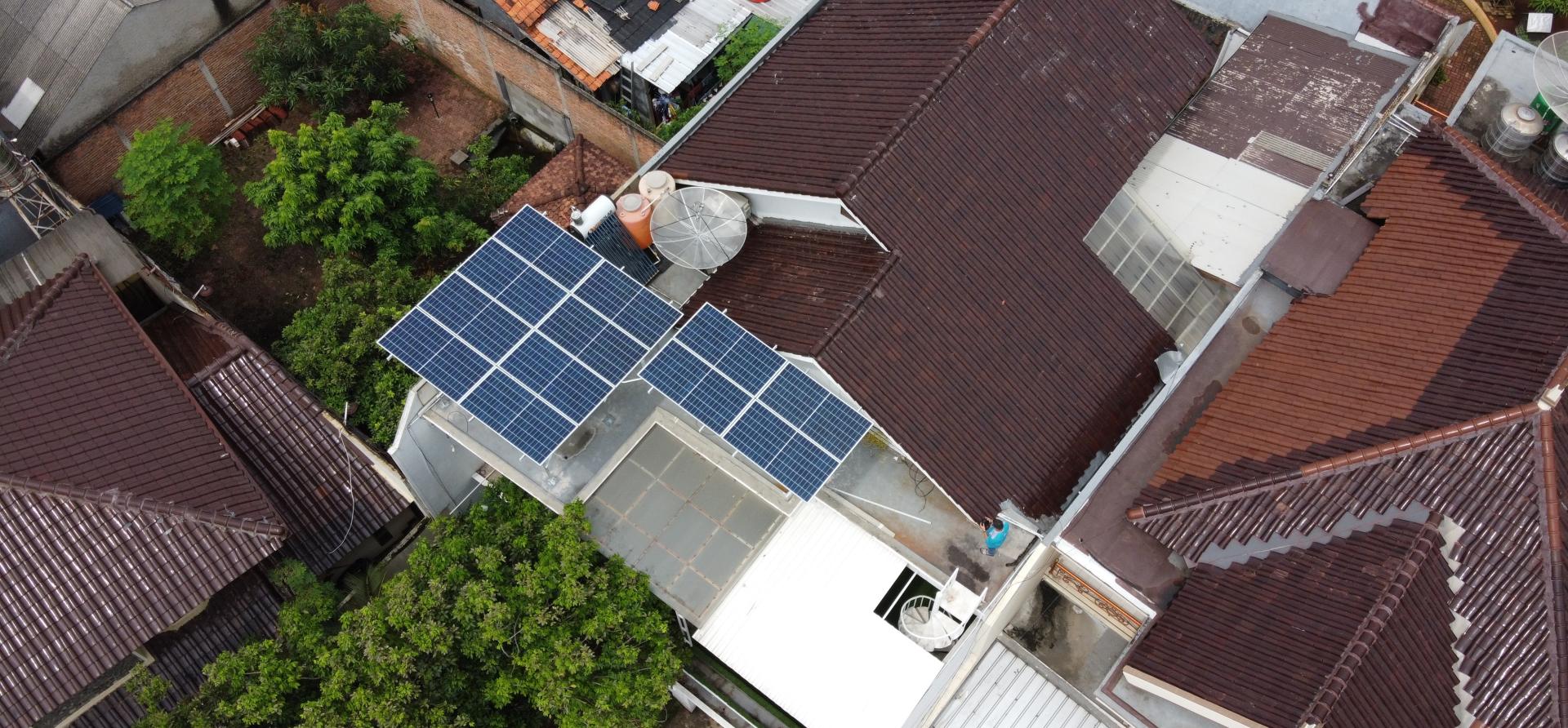
- Standardization: We need strict enforcement of MNRE standards now. If we don’t, we are looking at a maintenance nightmare of failing mounting structures and rusted frames in five years.
- Community Solar: Millions of Indians live in high-rises where they don’t own the roof. “Virtual Net Metering”—allowing people to buy a “share” of a remote solar plant—is the only way to bring the apartment dwellers into the fold.
Final Word: PM Surya Ghar has successfully killed the myth that solar is a boutique luxury for the wealthy. It has turned the humble Indian roof into an economic engine. But to reach the finish line of 10 million homes, we have to move past the “low-hanging fruit.” It’s no longer just about writing subsidy checks; it’s about a total modernization of the last-mile grid and a fundamental peace treaty between the consumer and the utility. We are 30% of the way to a revolution. The remaining 70% will be the real test.