Kitchens in Crisis: The 2026 LPG Reversal and the Return of the Coal Stove
The return to coal in Bihar and the shuttering of roadside dhabas all over India aren’t just market blips; they are symptoms of a national emergency. Without a resilient, diversified gas strategy, the “Blue Flame” will become an artifact—a luxury the nation’s most vulnerable can no longer afford to touch.
New Delhi’s official line remains a stoic denial: there is no “major shortage” of Liquefied Petroleum Gas (LPG). But drive through the industrial arteries of Punjab or the rural heartlands of Uttar Pradesh, and the evidence is written in the sky. The “Blue Flame”—once the celebrated olfactory signature of a modernizing India—is flickering out. In its wake, the heavy, acrid ghost of coal and woodsmoke has returned to haunt the Indian hearth.
The numbers don’t lie, and they certainly don’t comfort: LPG demand cratered by 16% in April 2026. In the cold calculus of energy economics, this isn’t a victory for induction stoves or efficiency. It is the statistical wreckage of a massive, localized fuel famine. As we grind into the second quarter, India’s clean-fuel dreams are being traded for the “dirty” survivalism of the nineteenth century.
While the Ministry of Petroleum and Natural Gas (MoPNG) dismisses the current dry spell as a cocktail of “panic booking” and localized friction, the cold data suggests something far more systemic. We are witnessing a structural unraveling. From a Rs 993 price hike in commercial cylinders to Bihar’s desperate, regressive pivot back to the coal pits, the signs of an energy emergency are everywhere. This isn’t just another market wobble; it is a direct hit to India’s de-carbonization ambitions.
The Economic Shockwave: The May 1st “Existential Crisis”
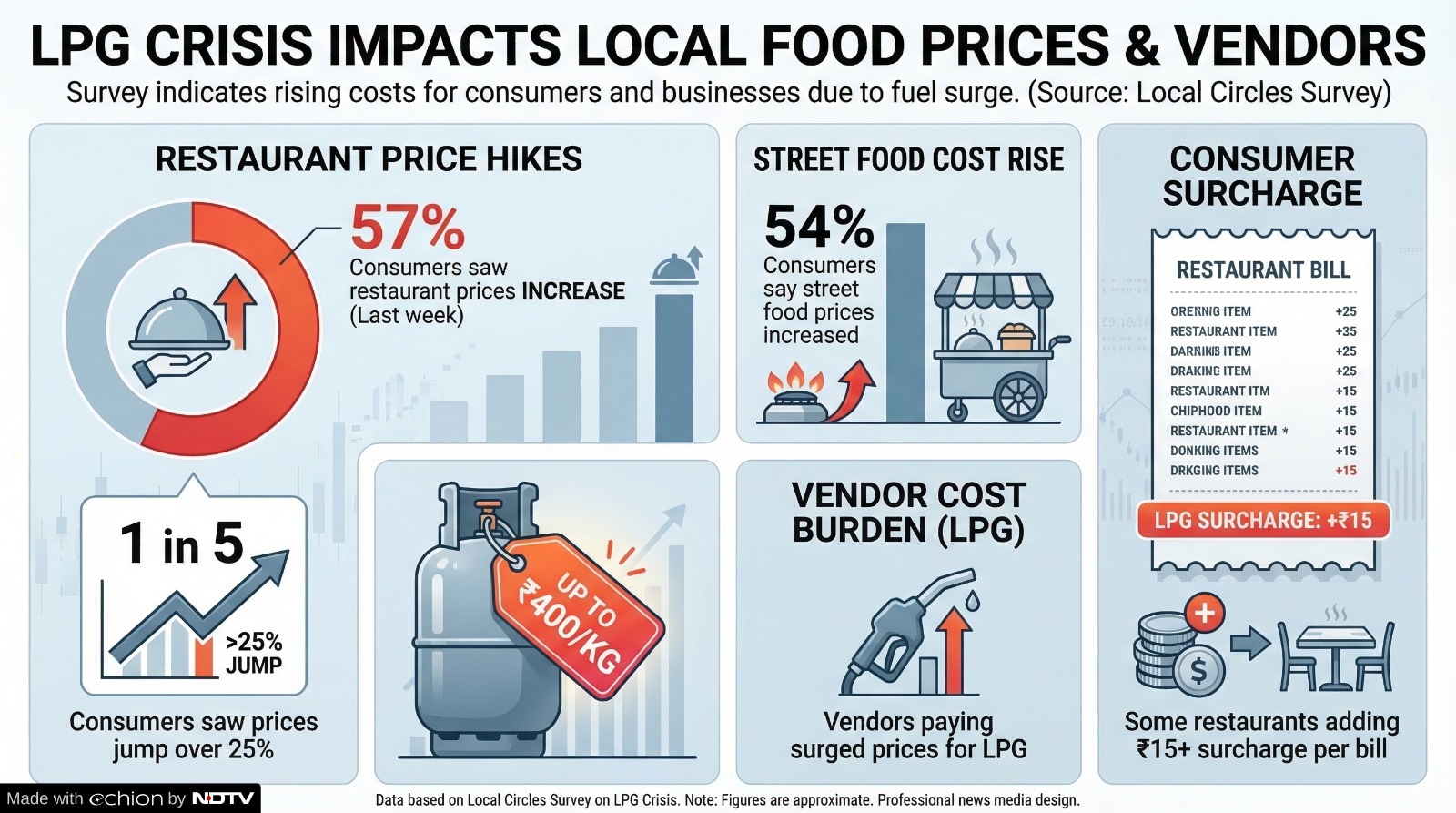
On May 1, 2026, the hospitality sector—the engine of urban employment—woke up to a grim new reality. The price of a 19-kg commercial LPG cylinder spiked by Rs 993, pushing the cost in Delhi to a staggering Rs 3,071.50.
This wasn’t an isolated event; it followed a volatile spring where prices had already climbed by **Rs 218** in April.
The Fallout for the Food Industry:
- Menu Inflation: The Federation of Hotel & Restaurant Associations of India (FHRAI) is sounding the alarm, warning that a 10% to 15% hike in food prices is “imminent” just to keep the lights on.
- Operational Closures: The streets of Mumbai are already feeling the pinch. Industry trackers estimate that 20% of small and mid-sized eateries have either shuttered or moved to “limited hour” menus.
- Asymmetric Impact: Fine dining can hide these costs in premium pricing, but the “Dhaba” economy—the lifeblood of the working class—is staring down the barrel of total collapse.
The Demand Paradox: Analyzing the “Fuel Forced-Substitution”
The government points to “steady domestic production” as a shield against criticism, but the internal numbers tell a more harrowing story. In April 2026, LPG demand reportedly plummeted by 16%. This isn’t a triumph of efficiency. It is a “fuel forced-substitution.” When the clean option becomes a luxury and the supply lines go dark, the poor don’t stop eating; they simply regress to the dirtiest fuels available.
Comparative Analysis: The Great Regression
| Feature | Liquefied Petroleum Gas (LPG) | Cooking Coal (PDS Grade) |
|---|---|---|
| Calorific Value | High (~11,000 kcal/kg) | Low (3,000 – 4,000 kcal/kg) |
| Environmental Impact | Low (Clean burning) | High (Soot, CO2, Particulates) |
| Price (May 2026) | Rs 3,071.50 (Commercial) | Subsidized via PDS |
| Health Risk | Minimal | High (Respiratory/HAP issues) |
| Demographic Burden | Urban Middle/Upper Class | Rural Poor & Small Vendors |
| Supply Stability | Volatile (90% Import Dependent) | Stable (Domestic Mining) |
The Policy Retreat: Bihar’s Coal Initiative
The most damning evidence of this crisis is the policy shift currently unfolding in Bihar. In a move that effectively guts a decade of progress under the Pradhan Mantri Ujjwala Yojana (PMUY), the state has begun a massive initiative to distribute cooking coal through Public Distribution System (PDS) shops.
This isn’t a minor pilot program; it targets 21 million ration card holders. In rural districts where an LPG refill has become a financial impossibility, the state is leaning into a grim pragmatism. If the global gas market is broken, they will burn what they have: domestic coal. For any observer of the climate crisis, this is a “red alert” moment. We are watching the de-carbonization journey moving in reverse, trading the lungs of the poor for the survival of the kitchen.
Why the “No Shortage” Narrative Persists
The Centre’s insistence that everything is fine is a technical truth built on a house of cards. By prioritizing the 14.2 kg domestic cylinders—frozen at Rs 913 in Delhi via aggressive subsidies—they are shielding the voter while the economy burns beneath them.
This creates a dangerous dual-market distortion:
- Hoarding & Diversion: With the gap between commercial and domestic prices widening to nearly Rs 2,100, the black market is thriving. The incentive to illegally siphon domestic gas into commercial kitchens is irresistible, further hollowing out domestic stocks.
- Industrial Paralysis: In the ceramic hub of Morbi, Gujarat, the world’s second-largest production center has slowed to a near standstill. Distributors are prioritizing residential quotas over industrial contracts, leaving factories cold.
- The Invisible Crisis: By focusing on the “average consumer,” the official narrative ignores the millions of micro-entrepreneurs and rural families being shoved back into the “Smoke Age.”
The Road Ahead: Toward True Energy Sovereignty
The 2026 shock has revealed a massive “planning gap” in the nation’s energy architecture. We moved the masses to LPG for health, but we forgot to build the “moats” to protect that transition from global volatility. To save the “Blue Flame,” the strategy must change:
- Strategic LPG Reserves: India must break ground on underground salt cavern storage immediately. We need a 90-day strategic reserve to match our crude oil buffer.
- Diversification Beyond the Gulf: We need aggressive, iron-clad contracts with East African producers like Mozambique and Tanzania, as well as the U.S., to circumvent the Hormuz trap.
- The “E-Cook” Revolution: We must accelerate electric cooking infrastructure. Decoupling the Indian kitchen from global gas prices by plugging it into a renewable-heavy grid is the only long-term fix.
- Bio-LPG & CBG: Decentralized production is key. Investing in Compressed Biogas (CBG) from agricultural waste can turn the rural economy into a self-sustaining energy producer.
Summary: The 2026 LPG Crisis
- “India faces a severe 16% demand collapse as a record ₹993 price hike—driven by West Asian maritime blockades—forces a 50% surge in commercial fuel costs.”
- “Bihar’s unprecedented pivot to PDS coal distribution for 21 million households signals a desperate retreat to solid fuels, risking localized acid rain and crop failure.”
- “Systemic import dependency and new digital rationing frictions have exposed the fragility of India’s energy security, threatening a decade of environmental and public health progress.”